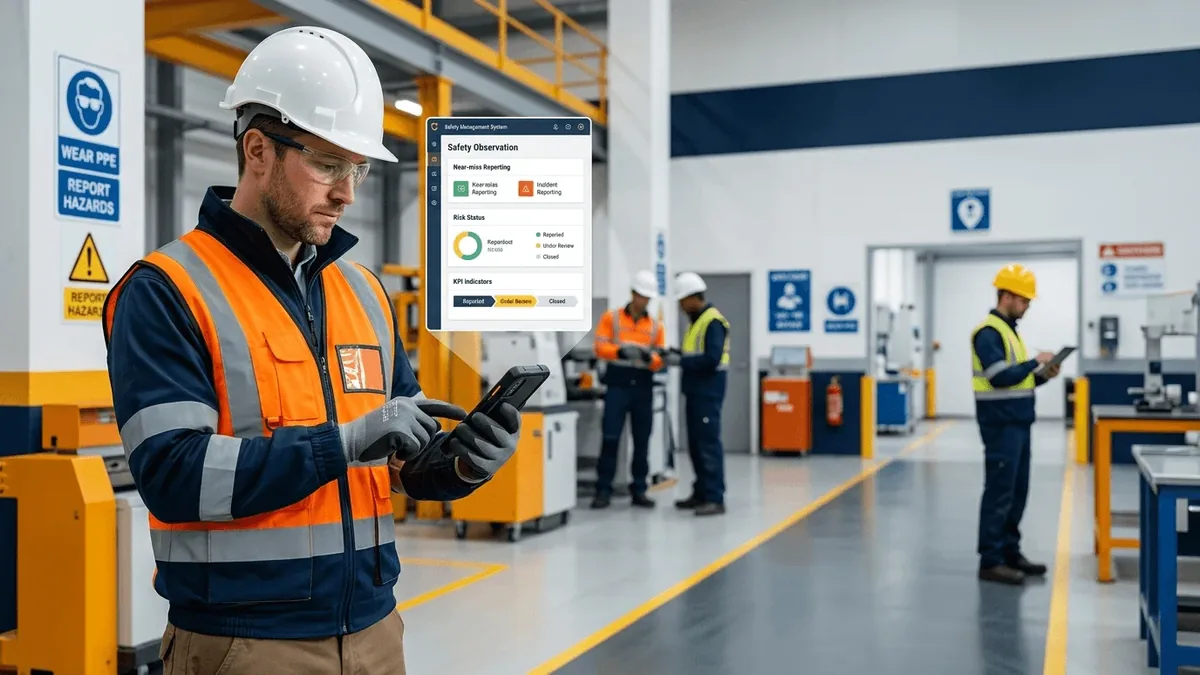
Every workplace accident has a history — a chain of near misses, unsafe conditions, and warning signs that, if caught early, could have prevented the incident entirely. The organizations with the strongest safety records aren't the ones with no hazards; they're the ones with systems that catch and correct hazards before they escalate. This is where safety management software makes the biggest difference.
Why Near Misses Matter More Than You Think
Safety professionals have long understood that near misses vastly outnumber actual accidents, and that each one represents a free lesson — a chance to fix a hazard before someone gets hurt. The problem is that near misses are the easiest incidents to ignore, precisely because nothing bad happened. Without a simple, low-friction way to report them, most near misses go undocumented and the underlying hazard remains.
A digital Safety Management System changes this equation by making near-miss reporting as fast as taking a photo and tapping submit — removing the excuse of "it wasn't a big deal, so why report it."
Leading Indicator vs Lagging Indicator
Near miss reports are leading indicators that forecast risk. Accident reports are lagging indicators that log harm after it occurs. World-class EHS programs focus heavily on leading indicators.
From Report to Resolution: The Risk Reduction Workflow
Step 1: Capture at the Point of Observation
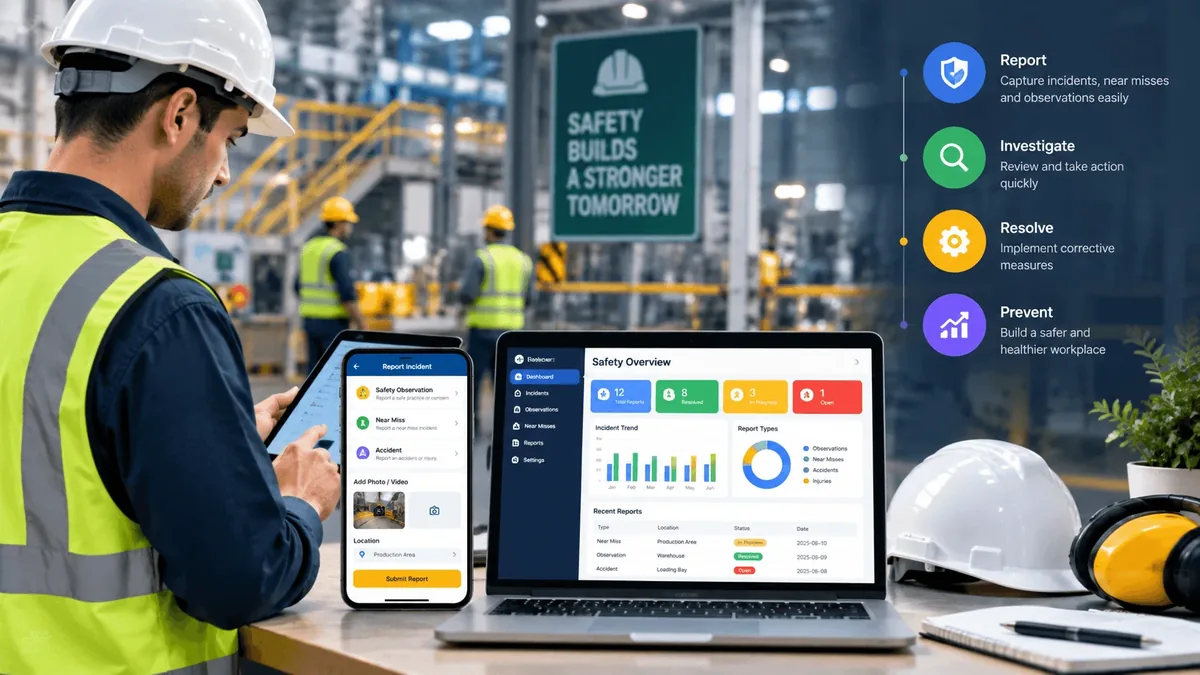
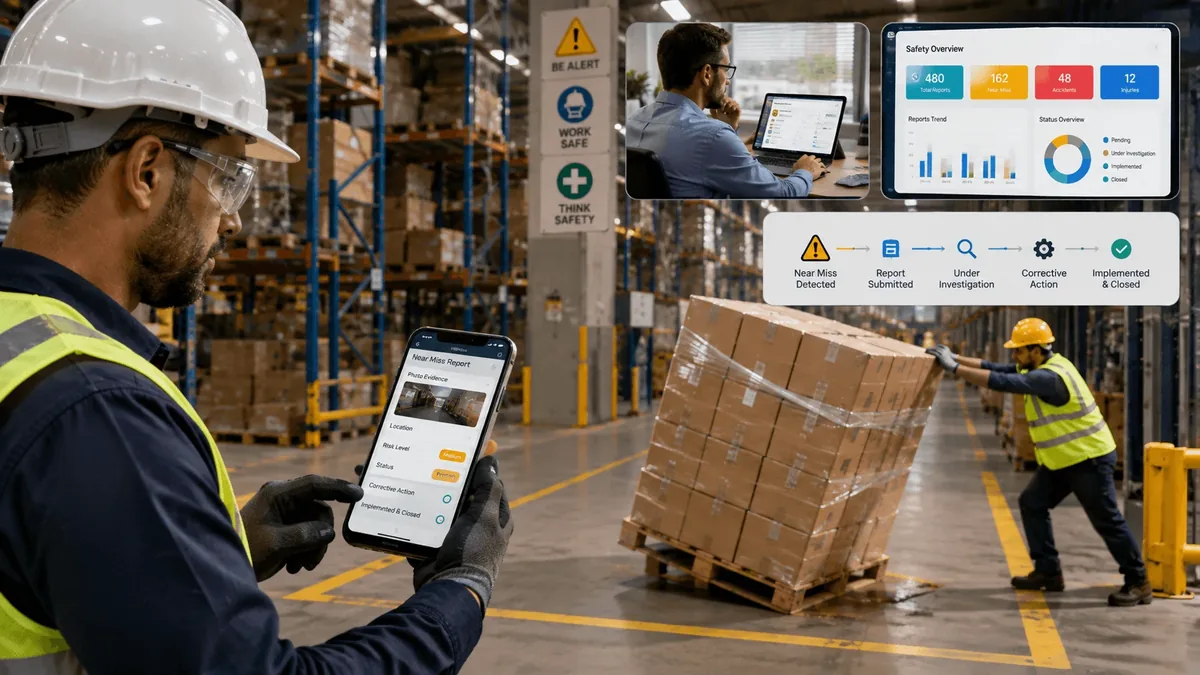
Employees report near misses, unsafe acts, and unsafe conditions directly from a mobile device, attaching photo or video evidence at the moment they notice the issue — while details are fresh and context is clear.
Step 2: Structured Review and Investigation
Reports move into a clear status: Pending / Under Investigation, then Implemented & Closed once corrective action is verified. Department managers handle first-level review for their area, while EHS/safety administrators oversee company-wide verification and closure.
Step 3: Trend Analysis Across the Organization
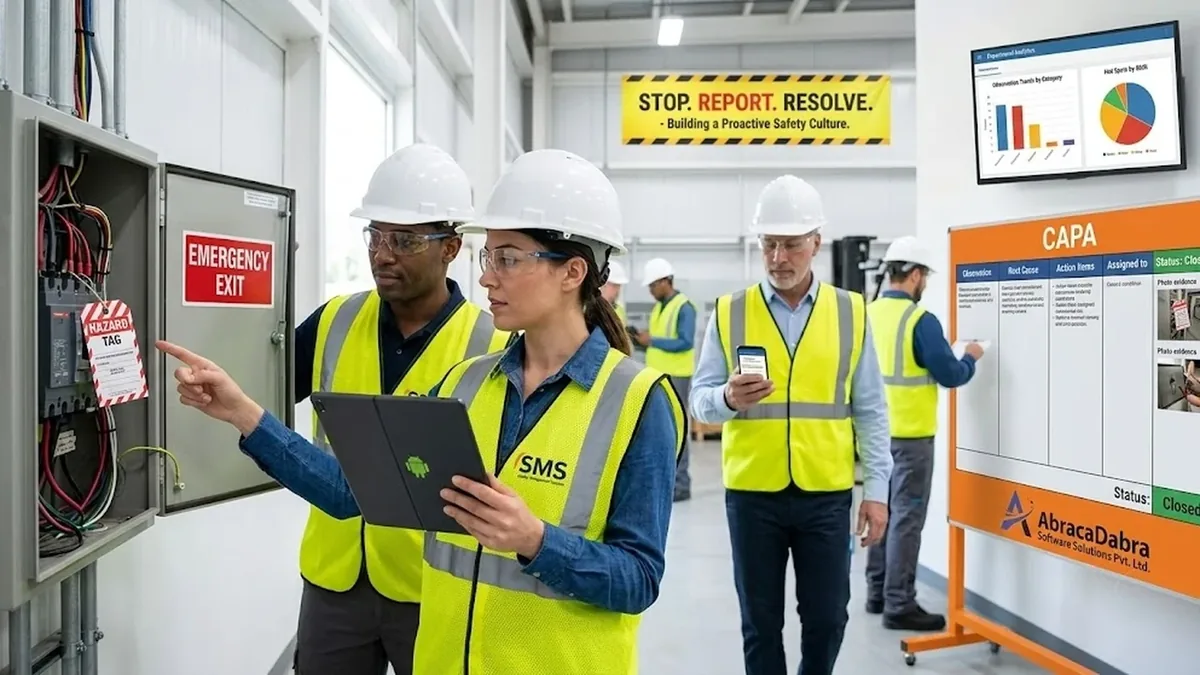
Individual near-miss reports are valuable on their own, but their real power emerges in aggregate. When safety software tracks near misses, unsafe conditions, and accidents together, EHS teams can identify patterns — a particular piece of equipment, a specific shift, a recurring location — that point to systemic risks rather than isolated incidents.
Step 4: Proactive Corrective Action
Armed with trend data, safety teams can prioritize corrective action where it will have the greatest impact, rather than reacting only after a serious incident occurs. This is the core of proactive risk reduction: using leading indicators (near misses) instead of relying solely on lagging indicators (recordable injuries).
Practical Business Benefits
- Fewer recordable incidents: Organizations that actively manage near misses see measurable reductions in accident frequency over time.
- Lower compliance and insurance risk: Documented investigation and closure of near misses demonstrates due diligence during audits and claims reviews.
- Faster incident response: When an accident does occur, structured accident reporting — including investigation status and closure tracking — ensures nothing falls through the cracks.
- Better-informed safety investment: Trend dashboards help justify budget for equipment upgrades, additional training, or process redesign based on actual risk data rather than guesswork.
A Practical Example
A warehouse employee notices that a pallet has been stacked slightly off-balance near a walkway — nothing has happened yet, but it looks risky. They log a near-miss report with a photo in under a minute. The department manager reviews it that same shift, has the pallet re-stacked, and marks the report "Implemented & Closed." Over the following months, the EHS team notices a pattern: several similar near misses have been logged in the same storage zone. That trend data prompts a redesign of the stacking procedure in that area — preventing what could eventually have become a serious injury.
Actionable Steps for Stronger Risk Reduction
- Track near misses as a leading KPI, not an afterthought to accident counts.
- Investigate and close reports promptly — a near miss that sits unreviewed sends the wrong signal to employees.
- Look for patterns across departments and shifts, not just individual incidents.
- Feed findings back into training and process design, closing the loop between reporting and prevention.
Conclusion
Accident prevention starts long before an accident happens — it starts with how seriously an organization treats the small warning signs. Safety management software turns near-miss reporting from an ignored formality into a genuine early-warning system, giving organizations the data and speed they need to reduce risk proactively.
Want to catch hazards before they become incidents?
Explore how SMS Safety Management System streamlines near-miss reporting, investigation, and trend analysis.
Explore Live Platform