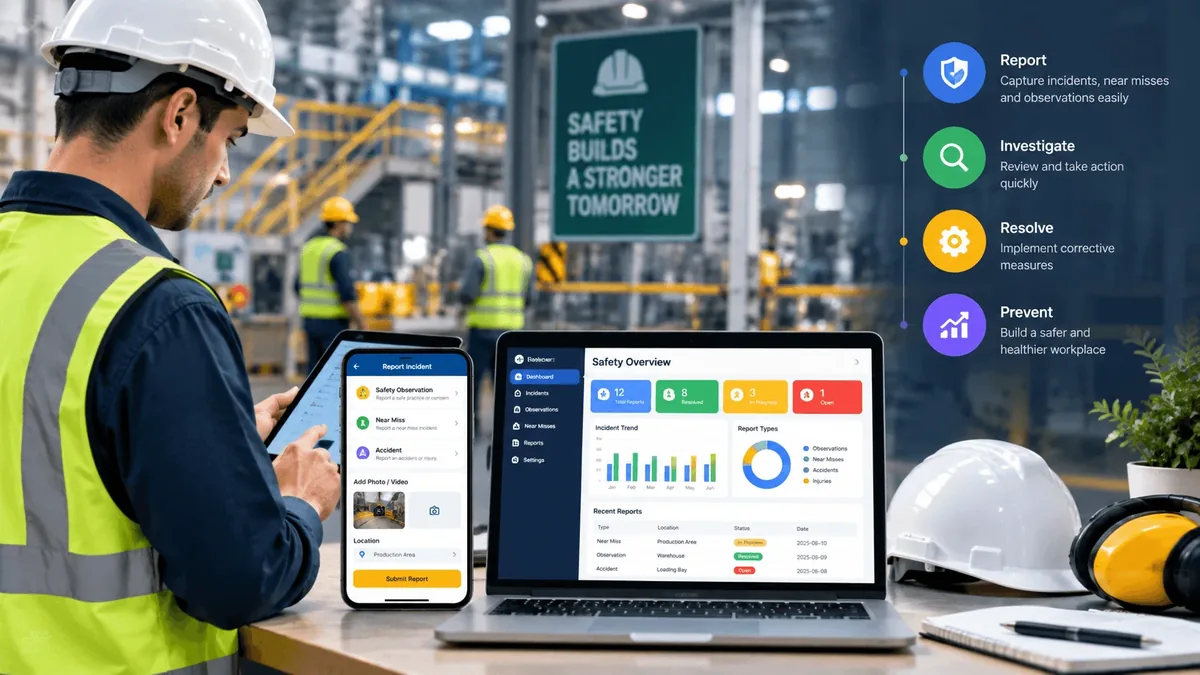
Workplace safety culture isn't built through posters and annual training alone — it's built through everyday systems that make it easy, fast, and consequence-free for employees to speak up. A modern Safety Management System gives organizations the digital infrastructure to turn safety from a compliance checkbox into a living, breathing part of how work gets done.
What Does "Safety Culture" Actually Mean?
A positive safety culture exists when employees at every level — from shop-floor workers to executives — feel a shared responsibility for identifying and addressing hazards before they cause harm. It's measured not by the absence of incidents alone, but by how openly employees report unsafe conditions, near misses, and even positive safety behaviors they observe in coworkers.
The challenge for most industrial organizations isn't a lack of commitment to safety — it's a lack of frictionless tools to act on that commitment consistently.
Core Principle
Safety culture is demonstrated every time an employee's report leads to visible, transparent, and prompt corrective action.
How a Safety Management System Supports Culture Change
1. Making Reporting Effortless
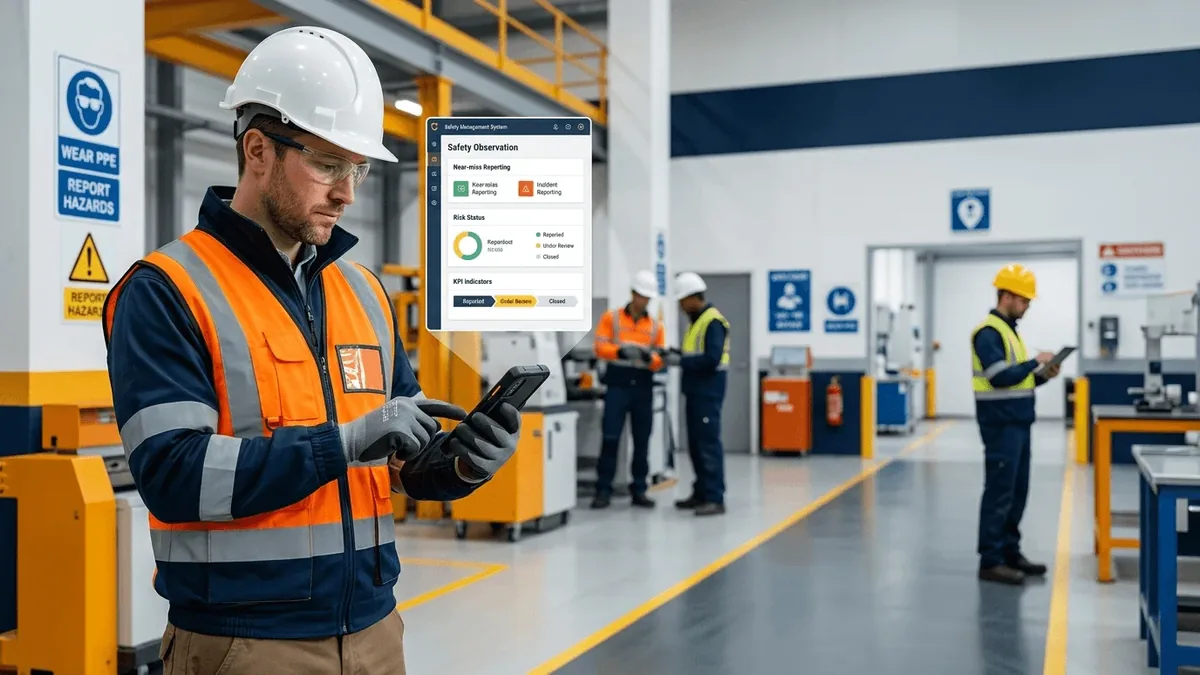
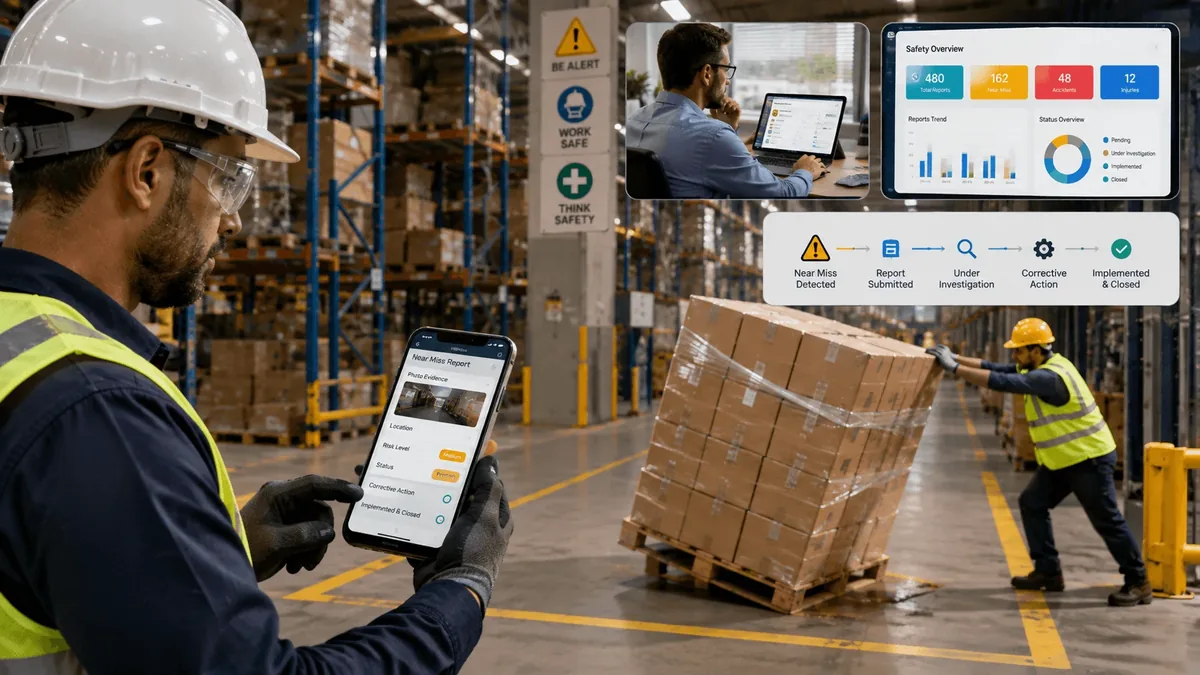
A digital Safety Management System allows any employee to report an unsafe act, unsafe condition, near miss, or accident directly from a mobile device, complete with photo or video evidence. When reporting takes thirty seconds instead of ten minutes of paperwork, participation rises dramatically.
2. Structured, Transparent Review
Every submission moves through a clear workflow: department managers conduct first-level review, and EHS/safety administrators perform final verification and status progression. Because submitters can track whether their report is Pending, Approved, or Rejected, employees see that their voice leads to real action — reinforcing the behavior organizations want to encourage.
3. Confidential Ethics and Whistleblower Channels
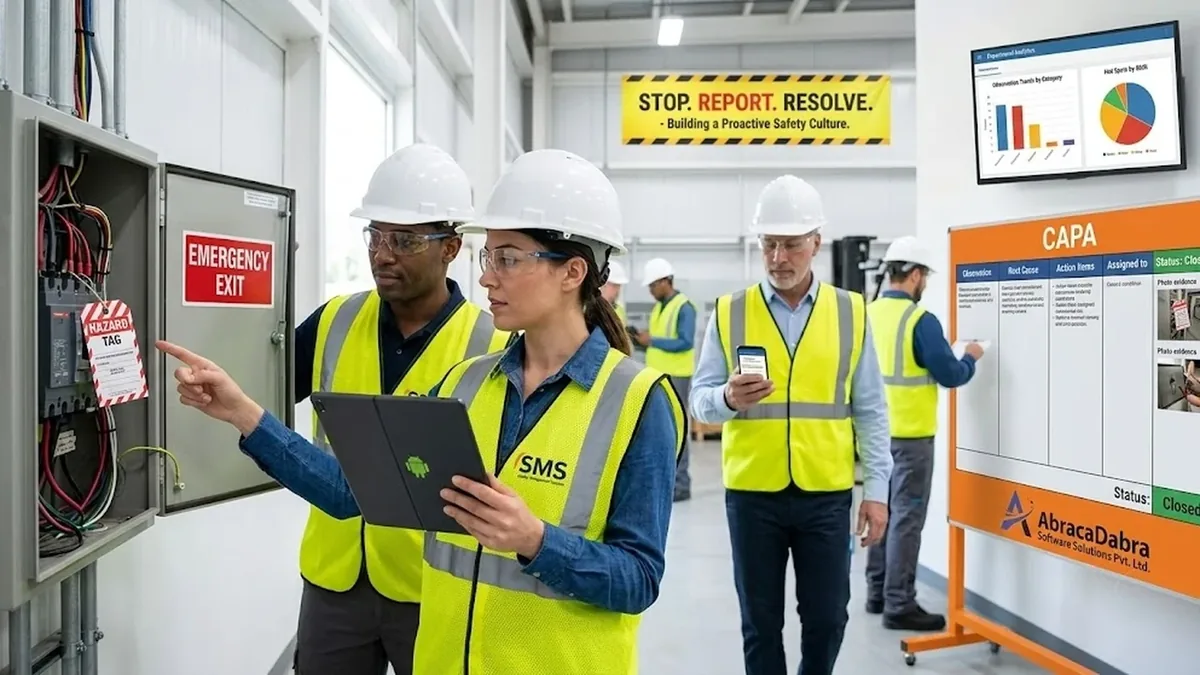
A genuine safety culture also requires channels for employees to raise concerns confidentially, including ethics or whistleblower complaints that might involve retaliation risk. Built-in confidential reporting, reviewed by HR and escalated appropriately, signals that the organization takes employee concerns seriously at every level.
4. Leadership Visibility Without Micromanagement
Executives and directors benefit from company-wide KPI dashboards showing trends in near misses, accidents, and safety observations — without needing to be involved in day-to-day case management. This gives leadership the strategic visibility to invest in the right areas while keeping operational review where it belongs, with department managers and EHS teams.
Practical Business Benefits
- Reduced incident rates: Organizations that make near-miss reporting easy typically catch and correct hazards before they escalate into recordable injuries.
- Faster regulatory readiness: Digital records with timestamps, evidence, and review history simplify compliance audits and inspections.
- Stronger trust between employees and management: Transparent status tracking shows employees that safety reports are acted on, not ignored.
- Better resource allocation: Trend data helps EHS teams focus training and equipment investment on the departments or hazard types that need it most.
A Practical Example
An employee notices a spill near a walkway that hasn't yet caused an incident. Instead of mentioning it informally and hoping someone else reports it, they log a near-miss report with a photo directly from their phone. Their department manager is notified immediately, has the area addressed within the hour, and marks the report "Implemented & Closed." The employee sees the update and knows their report made a difference — reinforcing exactly the behavior a strong safety culture depends on.
Actionable Steps to Strengthen Your Safety Culture
- Make near-miss reporting a habit, not an exception. Track and celebrate near-miss reporting volume as a leading indicator, not just accident counts as a lagging one.
- Close the loop visibly. Ensure every report gets a status update the submitter can see.
- Protect confidentiality where needed. Keep ethics and whistleblower channels separate and clearly communicated.
- Share safety wins, not just statistics. Highlight specific near misses that were caught and corrected to reinforce the value of speaking up.
Conclusion
A positive safety culture isn't declared in a mission statement — it's demonstrated every time an employee's report leads to visible action. A digital Safety Management System gives organizations the structure, transparency, and speed needed to make that happen consistently, at scale.
Ready to strengthen your organization's safety culture?
Discover how a structured Safety Management System streamlines reporting, review, and risk reduction.
Request a Live Walkthrough